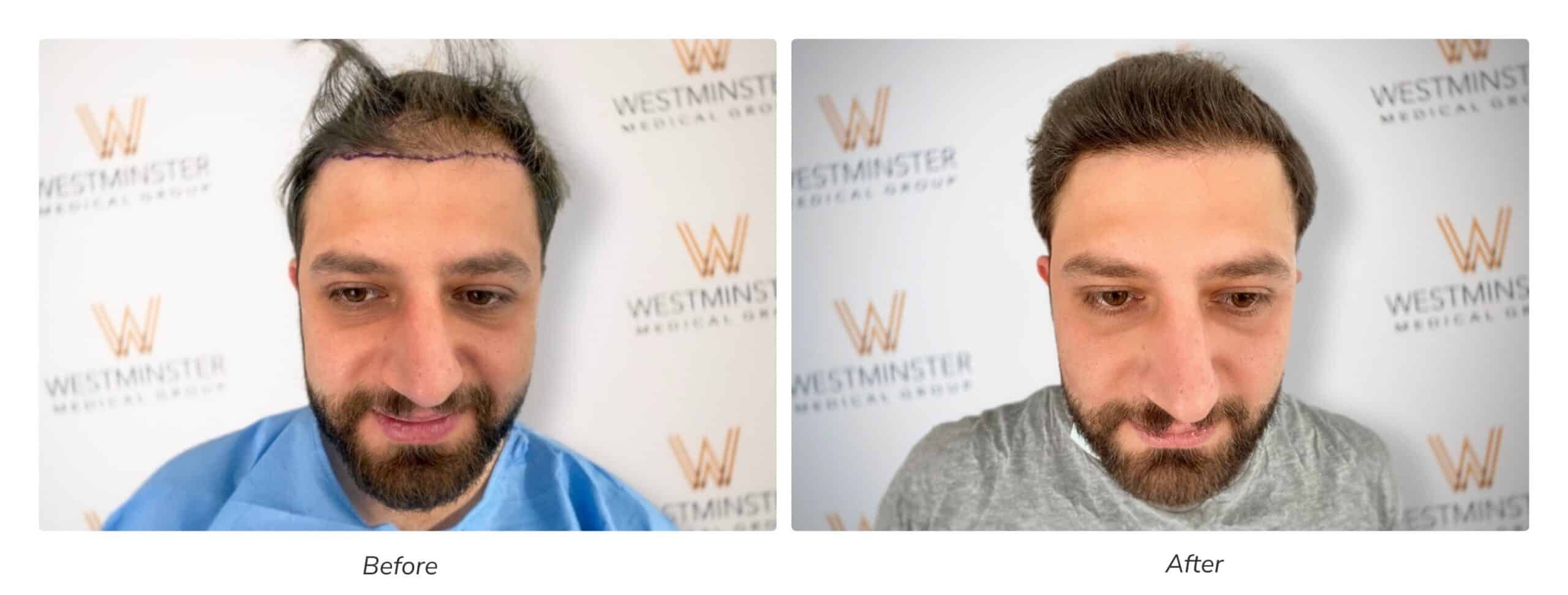
Am I a Good Candidate for a Hair Transplant? The Norwood Scale and Donor Capacity Explained
Deciding to undergo a hair transplant is a significant step toward restoring your confidence. However, before focusing on timelines or styling, you must answer a fundamental clinical question: Am I actually a good candidate for surgical hair restoration?
Not everyone experiencing hair loss is an immediate candidate for surgery. Determining eligibility requires a careful evaluation of your current hair thinning pattern, the stability of your hair loss, and the health of your donor hair supply.
Understanding the Norwood Scale
To evaluate the extent of male pattern baldness, hair restoration specialists worldwide use a standardized classification system known as the Norwood Scale. This scale categorizes hair loss into seven distinct structural stages:
- Norwood Stages 1 to 2: Represents minimal to minor recession along the anterior hairline and temples. Surgery is rarely recommended at this stage; instead, medical management is typically advised to prevent further thinning.
- Norwood Stages 3 to 4: Characterized by a deeper, distinct “M” or “U” shaped recession along the temples, often accompanied by early thinning at the crown (vertex). Individuals at these stages are frequently excellent candidates for building a structurally sound hairline.
- Norwood Stages 5 to 6: Displays advanced hair loss, where the bridge of hair separating the receding hairline and the bald crown begins to break down or disappears entirely. Successful transplantation at this stage requires strategic graft placement to maximize visual coverage.
- Norwood Stage 7: The most severe stage of pattern baldness. Only a narrow band of hair remains at the back and lower sides of the scalp.
Evaluating Your Permanent Donor Capacity
The Norwood Stage only tells half the story. The ultimate limiting factor for any hair transplant is your permanent donor capacity. A hair transplant does not create new hair; it strategically redistributes healthy, DHT-resistant hair follicles from the back and sides of your head to the thinning regions.
A viable candidate must possess:
- Adequate Donor Density: A high concentration of healthy follicular units per square centimetre in the permanent safe zone.
- Good Hair Caliber: Thicker, coarser hair strands provide significantly more visual volume and scalp coverage than fine, thin hair shafts.
- Stable Hair Loss: If your hair loss is actively accelerating, undergoing surgery too early can result in an unnatural look as your native, non-transplanted hair continues to recede behind the new grafts.
Key Factors That Determine Eligibility
During a clinical evaluation, a specialist considers several essential criteria to ensure a safe and long-lasting outcome:
- Age and Stability
While there is no strict legal age limit, operating on patients under the age of 25 requires extreme caution. In younger individuals, future hair loss patterns are highly unpredictable. Stabilizing thinning with proven medical therapies prior to surgery is often the safest path. - Expectations vs. Reality
Surgeons must balance a patient’s aesthetic desires with their anatomical realities. If you are a Norwood Stage 6 with limited donor density, achieving the thick, dense hair of your teenage years is anatomically impossible. A good candidate understands that the goal is optimal strategic coverage and a natural appearance. - Overall Scalp Health
The recipient site must have a healthy blood supply to support and nourish the newly implanted grafts. Underlying scalp conditions, active inflammation, or severe scarring must be managed and resolved before surgery can be considered.
Advanced Diagnostic Profiling at WMG London
Determining your candidacy cannot be done accurately using a standard mirror. It requires advanced diagnostic technology.
At WMG London, we utilize high-definition digital trichoscopy to measure your exact donor density and hair shaft diameter. For complex extractions—such as tight, curly, or Afro-textured hair types—our central London clinic utilizes advanced, low-trauma punch technologies like the WAW DUO and UGraft Zeus systems. These specialized tools protect delicate hair roots during harvesting, preserving your donor supply and maximizing graft survival.
Discover Your True Candidacy Status
The most effective way to understand your options is through a professional anatomical assessment.
Ready to find out where you sit on the Norwood Scale and evaluate your donor reserves? Submit your photos through the WMG London Online Assessment Suite or book a comprehensive diagnostic consultation at our central London clinic today.